

In our previous article on Planning Estimates, we discussed how construction programmes are developed with an inherent level of confidence. Here, we look further into one critical aspect of programme development: determining activity durations.
When developing a construction programme, each activity requires a realistic duration that considers various factors. The accuracy of these durations directly impacts the overall project timeline and resource requirements.
- Historical performance data: From our database of 700-800 projects per year provides benchmarks for similar activities completed in comparable conditions. This data is continuously updated to reflect evolving construction methodologies and technologies and used when estimating durations for new projects.
- Work breakdown structure (WBS): Allows us to divide complex activities into manageable components. By calculating durations for smaller work packages, we can more accurately estimate the overall activity duration while identifying potential bottlenecks.
- Resource allocation: The number and type of labour, materials, and plant equipment assigned to an activity can directly impact its duration. This however, is not always the case as doubling the resources might not halve the time due to additional factors such as workspace limitations, safety protocols, or task interdependencies; maintaining optimal resource allocation is key.
- Site conditions & constraints: Just as with overall estimates, specific site conditions influence individual task durations. Factors include site access restrictions, laydown area limitations, prevailing weather conditions (especially for external works), required permits for specific operations (e.g., crane lifts), and interactions with adjacent activities; to name a few.
- Construction methodology: The chosen method for executing the work significantly affects the time required. Often there is a considerable amount of time dedicated to determining the staging required to perform the works in the most cost effective and efficient manner.
- Cost and budget impacts vs time: The costs of materials and time required for delivery and installation can have a major impact on durations. For example, using precast concrete panels will have a significantly faster duration compared to traditional in-situ pouring, however, the cost will be higher and the procurement lead time will also be longer. So, while time is saved on installation the cost and duration prior to installation will have an alternative impact.
- Resource-based calculations Consider the quantity and determined productivity rates of labour, equipment, and materials. This information is considerable when deriving durations for discrete activities.
- Expert judgment: Our experienced planners and key subcontractors provides invaluable insights, especially for unique or specialised activities with limited historical data.
However, formulas and calculations rarely tell the whole story in determining an activities duration. Experienced planners and other team stakeholders adjust baseline calculations to account for factors like learning curves, potential minor interruptions, site constraints, and the specific sequence of preceding and succeeding tasks (staging methodologies). A degree of realistic contingency, distinct from major risk allowances, is often embedded within activity durations to account for typical workface inefficiencies.
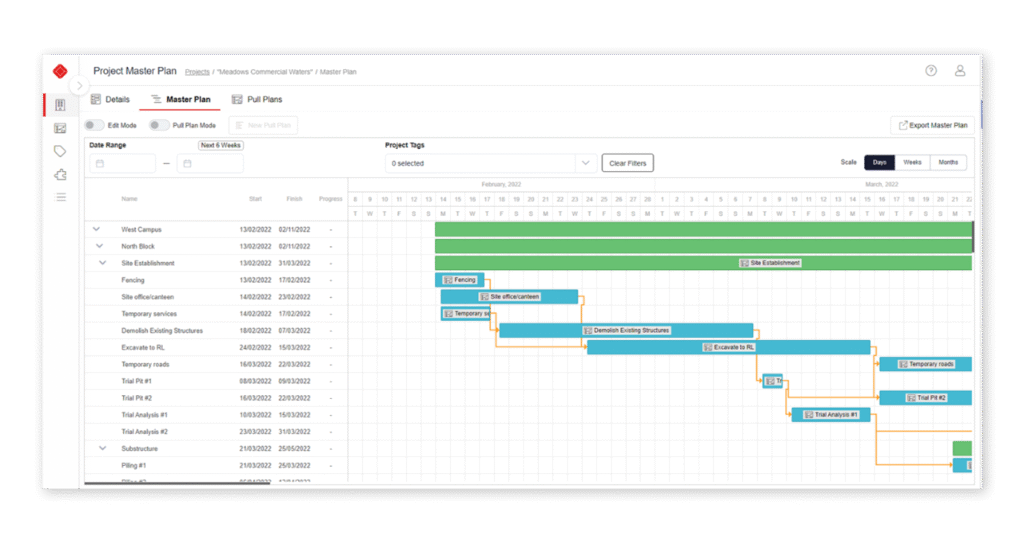
Understanding how these individual durations are meticulously calculated is key to appreciating the complexity behind a well-structured project programme. Each duration builds upon the next, forming the critical path and ultimately defining the project’s timeline. Getting these calculations right requires diligence, access to reliable data, and significant planning expertise.
The calculated durations ultimately form the basis of the project programme but remain subject to regular reviews and updates.
At the end of the day, accurate duration calculations require both analytical rigor and practical construction knowledge. While sophisticated algorithms and historical data provide valuable guidance, the expertise of seasoned construction professionals remains irreplaceable in developing realistic project timeframes.
If you need assistance in creating and reviewing your various programmes, please get in contact with us at experience@solidsupport.com.au. Our Team will be ready to assist you for your programming needs whether you are on the builder side or the client side.